Rare Tolkien books & collectables
Rare Tolkien Books & Collectables
Rare Tolkien books' mostly refers to first and early printings of the very first printings ever available to the public. They have never been out of print and have since been printed in many new editions over the decades. A collection can be hundreds or even a thousand books plus posters and other memorabilia. While newer editions can be collectable, especially deluxe editions with smaller print runs, the are not that expensive to buy. Tolkien book collecting is now so popular that any edition, in any language is collected somewhere all over the world, not just in the English speaking world. The most popular titles to collect are The Hobbit and The Lord of the Rings and the hundreds of printings and new edition of just these titles.
By Mark Faith · Last updated:
Collecting Tolkien Books for Fun and Investment
The main lesson to learn is that condition is everything in Tolkien books, and all modern collectable books for that matter.
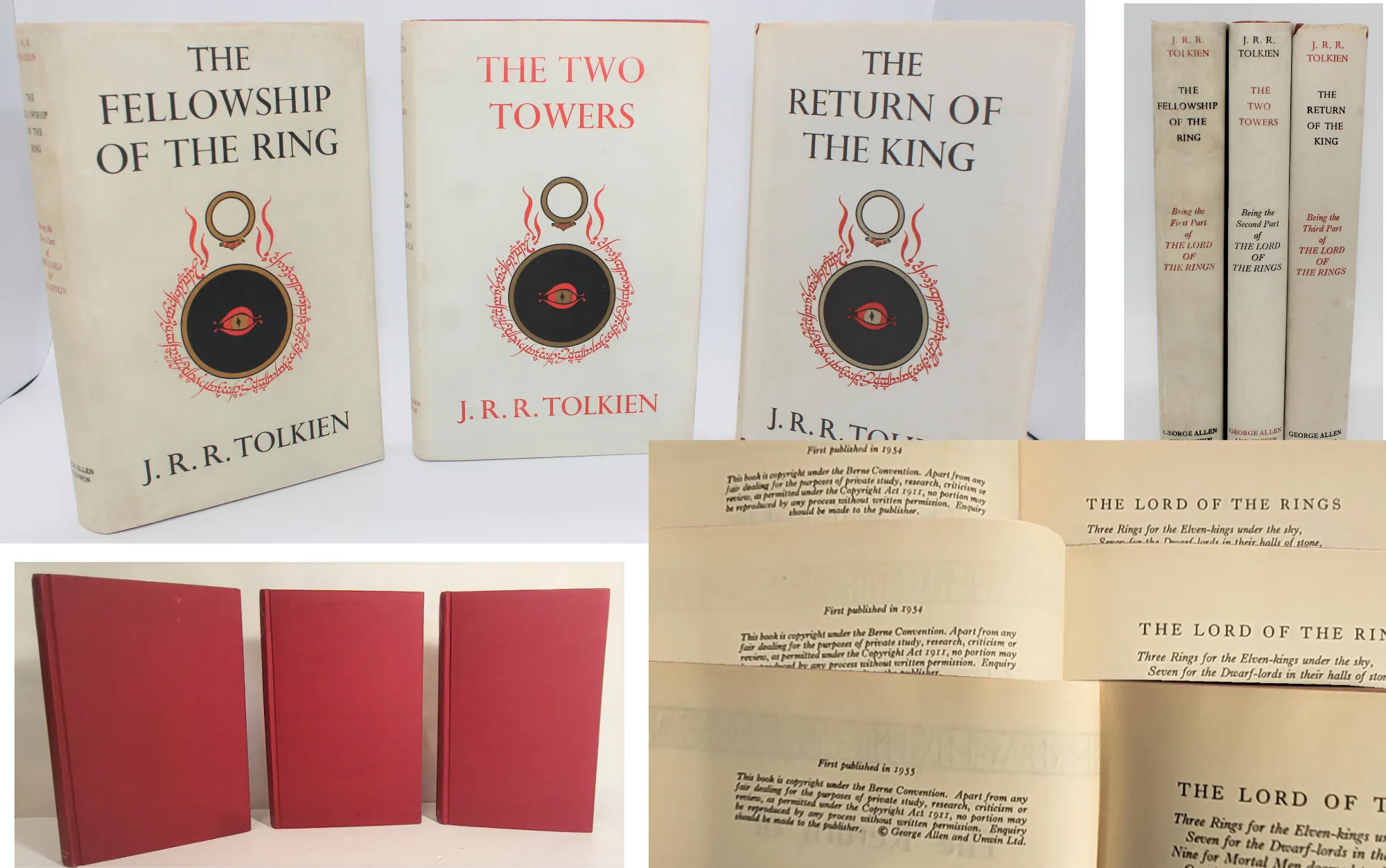
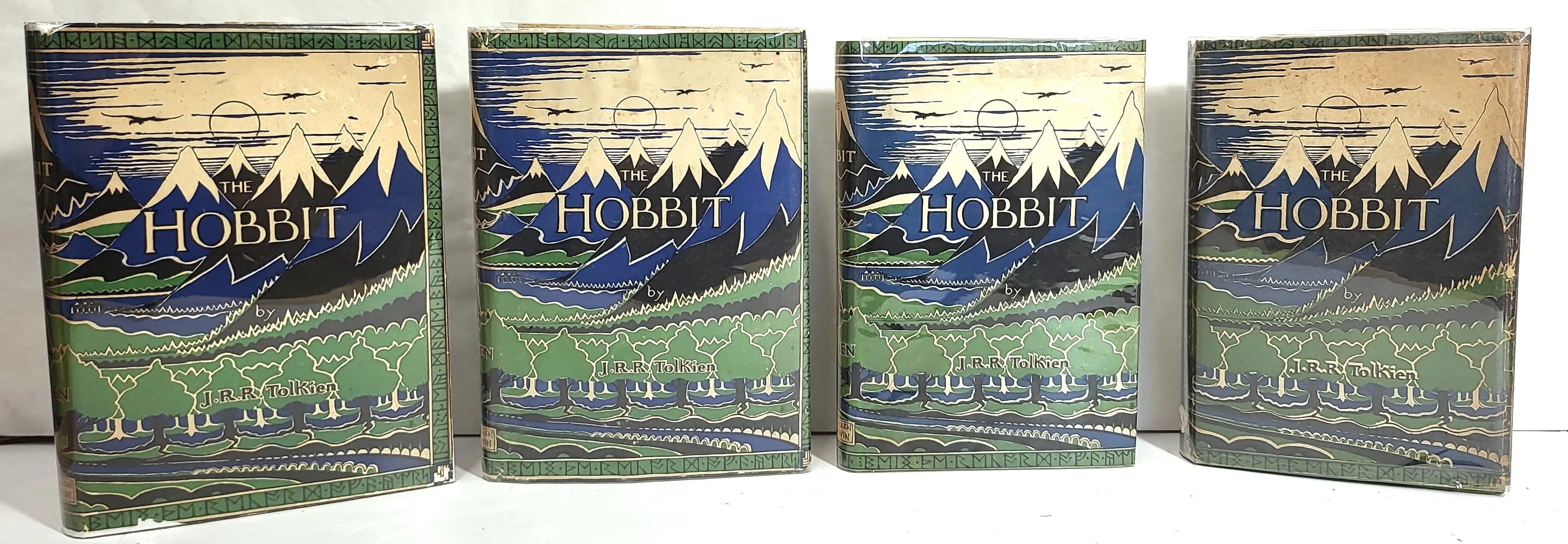
The older the printing, and the closer it is to the first printing, the more valuable it will be. Any printing must, however, be complete with the dust jacket and have no damage beyond normal wear and tear. Generally, they have to have been printed by the original publishers and not be a cheap book club edition. The same book of the same printing can be worth £50 or £5,000, it varies entirely according to condition. There are plenty of worn books; it is the fine ones that are truly rare. Every day someone says to me that they have a special old book, but then I learn that it is damaged, missing its jacket, or the jacket is severely damaged. Sadly, it is likely to be worthless, while the same book complete, and in near fine condition would be very valuable. As time goes on, however, even poor copies can rise in value as the best become unaffordable for the collector of average means. Tolkien book collecting caters to all fans' budgets.
A lesson which has become crucial in the internet age is that you have to assess the supply and demand at any given moment in time. If there are no other similar copies for sale, you will have to pay a lot more; if there are plenty of copies, you will pay much less. This can change month by month, year by year. The long-term trend in Tolkien is steadily upward. I have never seen prices fall. In the last two years copies published prior to 2000 are the scarcest and most are in poor condition. It pays to shop around and compare dealers if you can, but it's less time consuming and risky to buy from a specialist dealer who has a good reputation to protect. General dealers who are not specialists can be inconsistent in both quality and price. Auctions are the worse place to buy; one day you get a bargain, the next you overpay. Auction prices are not indicative of values and trends except over long periods of time.
Tolkien Book Values
Before the internet the prices of rare books, not just Tolkien's, were available to the public through dealer catalogues, auction results and some fan clubs. These were generally regional or national and buying a book from the other side of the globe was not common, except for the very valuable, museum standard copies. As information is inherently out of date as soon as it is printed, there could be a variety of prices for the very same book. Historically the most recent, highest selling price became the new benchmark. As regards very rare copies, however, so few came on to the market that values could be seen to jump or fall significantly since the last sale, months or years previously.
A dealer's price would be "priced forward" based on price trends and to allow a discount. The value was never real-time or fixed in stone, as with all rare collectibles. Prices of unique items are not set by fundamental laws of supply and demand but are speculative values. These are established not just by greedy sellers, but mostly by keen buyers driving prices up. This applies to most markets, not just the book market. Prices rise because people are able and willing to spend more. How often do we hear in the property market that a buyer put in a higher offer? That is not the seller's fault. Understanding rare book market prices is about understanding the market, especially for particular genres or authors. It takes time and experience for which there is no substitute except to pay others for their experience.
The internet changed two things in the world of books and collectibles. Firstly, one could now see the world-wide availability of items of a certain standard or with particular features. Secondly, one could see current asking prices. With a click of a button, the buyer could instantly see the quality and current price of a title, but also the seller could adjust their prices instantly. It created a "live" market. This aspect has contributed to a move away from auctions and the reliability of prices at auction. I was asked some time ago by a major dealer "did I adjust my prices real time"? The answer was "of course, why not?". For a general rare book dealer with thousands of books in stock, it is not practical to adjust prices of individual titles weekly or daily. This has led to specialisation by dealers. The fundamental feature of any market in collectibles is that their value is only what someone will pay. Trying to determine the current value of a book is now harder than ever.
One of the things I noticed in earlier internet days, when one rare book came on the internet market, five more did at the same time! Suddenly sellers were competing and forcing their own values down due to over-supply, generally by inexperienced new or one-off sellers. Once this flood of copies sold, it was months or even years before the same book came on the market again, and then at a much higher price due to scarcity. Knowing past market activity and supply is therefore as important as knowing current and predicted market values.
To err on the side of caution in a real time market, sellers 'price forward' their rare stock values more than ever to avoid selling too cheaply. Why? Not because they are greedy but because to stay in business they have to pay more to supply the same book in an increasingly popular market, often competing with their own customers in a purchase. This means that for rare books in high demand, the current price is likely to be what they will be worth at some point in the future, demand and supply being consistent in the meantime. Markets in popular collectibles act more like commodity markets as regards price trends, both being volatile due to speculation, but also subject to fundamental forces. Both buyers and sellers can be caught out by the same uncertainty and unpredictability. Sometimes I get a bargain; sometimes I pay too much. The ability to predict the market is more important than ever. However, knowing what you are buying is equally vital.
The internet has revealed that conventional wisdom about very rare books and their scarcity is not fact but simply knowledge that has become accepted because it came from a good source and has never been challenged. Most information on rare books is based on the printing technology or details provided by the publisher at the time. This is an aid to identifying true first editions but is not necessarily critical to value; it is interesting, but irrelevant. The publishers' printed descriptions, whose trade terminology was unique to the printing of books at the time, are now redundant. Several good photos can tell you everything you need to know.
Tolkien books are straightforward in so far as publishing details are clearly printed in the books. Certain variations, characteristics, or mistakes are interesting, but irrelevant to value. The books are now so scarce that all variations are valuable. What is more critical is the condition, not necessarily the printing or variation. An older printing in fine condition can be worth much more than an average early printing. The dust jacket's condition contributes most of the value of many contemporary books. Interesting features and details, whether they are correct or not, are secondary to condition, especially that of the dustjacket. What is important when choosing a particular book and its price is knowledge of market factors, not old-school publishing and book details.
This price focus can be upsetting to traditional dealers, collectors or fans. The commercialisation and commodity value aspects of modern book collecting offend the sensibility of some people, as if it degrades the intrinsic value of the author and his works. I often hear: "that's a ridiculous price you are charging, I bought mine for £25.00". The same could be said about current house prices. No new, younger buyer wants to hear about an old market and how clever you are for being born three decades sooner! It matters only what the price and condition are now and what is likely to happen in the future.
The truth about what people of all ages really want in books, or houses, is that they want the price to be low when they are buying, and then for it to shoot up soon after. They greedily want what earlier buyers got by accident but are too impatient to wait or put in the time required to buy correctly. Book investment may seem like a get rich quick scheme based on temporary market trends, but for most people it takes time and luck in the long term.
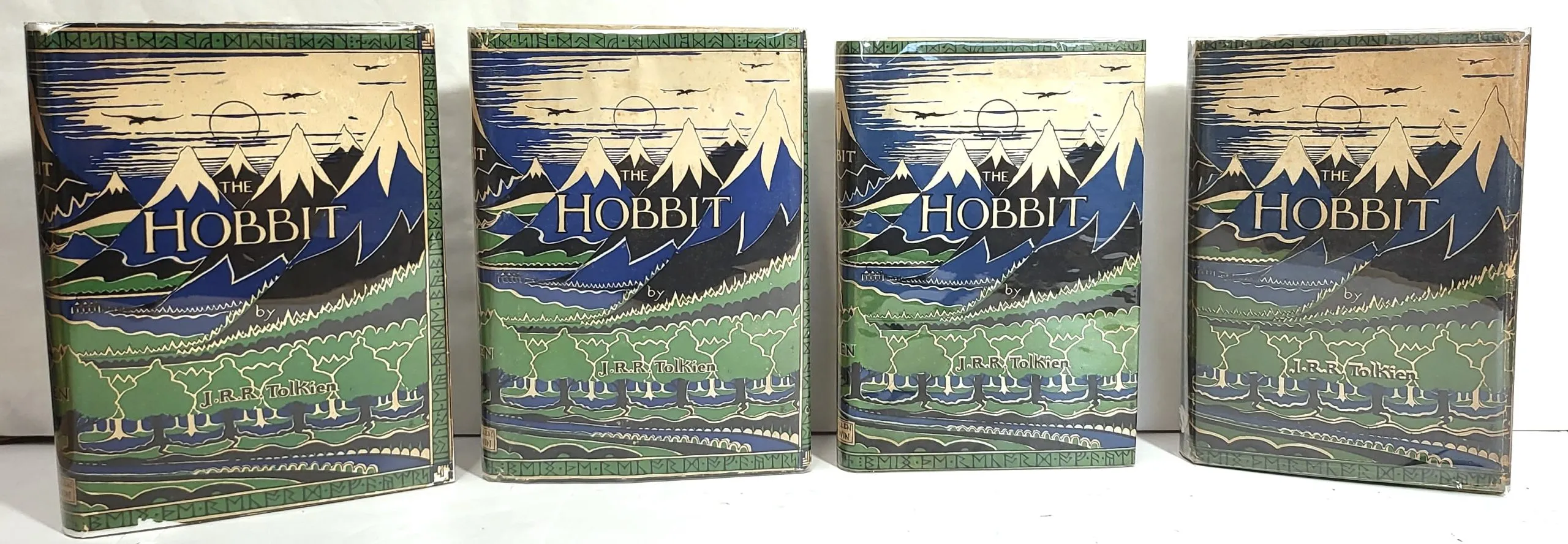
I have always shown photos of the dust jackets laid flat so that you can see the true condition; I hide nothing.
Several good photos can tell you everything you need to know.
Visit our online shop
If you buy from a specialist, you will generally get what you pay for, though not necessarily a bargain. If there is a problem later, you have recourse with a professional. Anything of real value that you can get at a bargain price is a near impossible find, but you can get lucky. If you do find a good one, buy it while you can. Our online catalogue highlights featured stock; each entry links to its live eBay or AbeBooks listing. The full, up-to-date inventory, including the newest additions, is always on those shops.
by Mark Faith
Collecting Tolkien Books for Fun and Investment
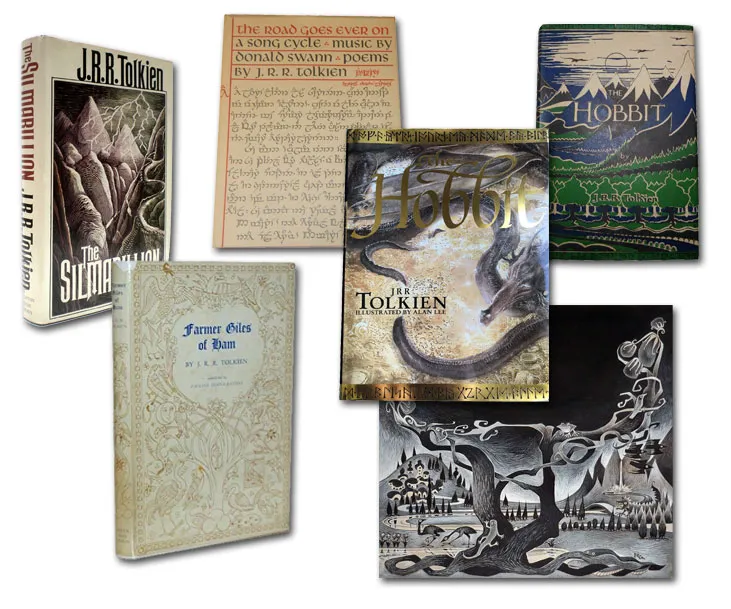
Collecting Tolkien rare books is a tale of modern, not antiquarian book collecting. Novice sellers' and buyers' mistakes notwithstanding, collecting Tolkien books is an enjoyable hobby with very few pitfalls. Though there are only a handful of titles, there are hundreds of editions and printings that range from £10 to £500,000 or even more, something for every budget. Most are easy to identify, and the prices generally reflect what you are going to get for your money. If it sounds too good to be true, it is. While there was in the not so distant past still the remote chance of a Tolkien treasure being found in grandmother's attic or a local charity shop, this doesn't happen much anymore. The general public are aware that early editions are valuable and do not give them away without doing a bit of research first. You do have to take the time to teach yourself the very basics, which is part of the pleasure. Dealers will help, to a degree, if you are buying from them, but they are busy and cannot be called upon to answer every little question you could have researched yourself. I publish some guides on my website, and you can subscribe to our collector's newsletter at no cost. Where you really need the advice of a specialist dealer is when spending thousands on a book. Informed collecting, with the intention of making a gain, is investment. It requires experience and management of risk, not luck or a gamble. If you cannot afford to spend the time or lose the money, do not do it. If you do not have time to educate yourself, then buy from a specialist dealer. Yes, there is always a speculative element to investing, but rarely do items of true intrinsic value lose their value completely, unless they are in a highly specialised field like art or subject to speculators manipulating the market. Tolkien books are great literature and have lasted the test of time as each new generation discovers his work. This cannot be said for many authors who tend to be generational favourites. The best thing you can get from collecting is enjoyment of something you can develop a passion for. Do not choose something just because it makes money, but because it is of interest to you in some way. In this way, in the worst cases, you can enjoy the books even if they do not make lots of money.
Frequently asked questions
Straight answers on buying rare Tolkien books, assessing condition and where to shop.
How do I buy rare Tolkien books from Festival Art & Books?
Featured stock is listed in the online catalogue on this site; each entry links to its live eBay or AbeBooks listing where you complete the purchase. The full, up-to-date inventory, including the newest additions, is always on those shops.
For anything of real value, or to commission sourcing for a specific edition or set, email Mark directly. Dealing direct saves marketplace fees and puts you in touch with the specialist himself.
Why does condition matter so much in Tolkien collecting?
The same printing can be worth £50 or £5,000, the difference is almost always condition. Older printings and copies closer to the first edition are more valuable, but only when complete with the dust jacket and free from serious damage beyond normal wear.
Every day someone tells me they have a special old book, only for it to be missing its jacket or severely worn. Sadly, such copies are often worthless while the same book in near-fine condition would be very valuable. Several good photographs tell you everything you need to know.
Should I buy from the catalogue, eBay or AbeBooks?
All three show the same honest photographs and condition notes, the catalogue is a curated window into featured stock, while eBay and AbeBooks carry the complete live inventory updated in real time.
If you buy from a specialist you will generally get what you pay for, with recourse if there is a problem later. Shop around when you can, but a reputable specialist dealer is less risky than a general bookseller or the lottery of auction rooms.
What counts as a rare Tolkien book?
In practice, "rare Tolkien books" mostly means first and early printings of titles that have never been out of print, chiefly The Hobbit and The Lord of the Rings, though hundreds of editions and printings exist across many languages.
While newer deluxe editions with smaller print runs can be collectable, the scarcest and most valuable copies are generally the earliest Allen & Unwin printings in the best condition. Posters, art and memorabilia round out a serious collection.